Branches: The Possible Futures of AI & Humanity
Evolution never stopped. It just changed materials.
For four billion years, life iterated through biology. Mutation, selection, repeat. Slow, brutal, patient. Then one species figured out language, and evolution found a shortcut. Ideas could now evolve faster than genes. A good idea spreads through a population in a generation. A good gene takes a hundred thousand years.
Writing made ideas immortal. Printing made them cheap. The internet made them instant. And now we've built something that can generate them.
For the first time in the history of this planet, intelligence is iterating outside of biology.
Quick disclaimer before we start: this is (my) map of the possible futures, and I may not nail it completely. Nobody knows the rules to this game. But hopefully you'll leave with some new ways to think about it, and maybe a headache.
Everyone asks whether AI will be good or bad for us. I think that's the wrong question. Nobody in 1900 asked if the airplane would be good or bad, and both answers turned out to be true. The better question is: what are the possible shapes this can take?
When you zoom out, evolution looks like a tree. Most branches die. A few change everything. Here's my attempt at mapping the branches in front of us.
Branch 1: The Merge
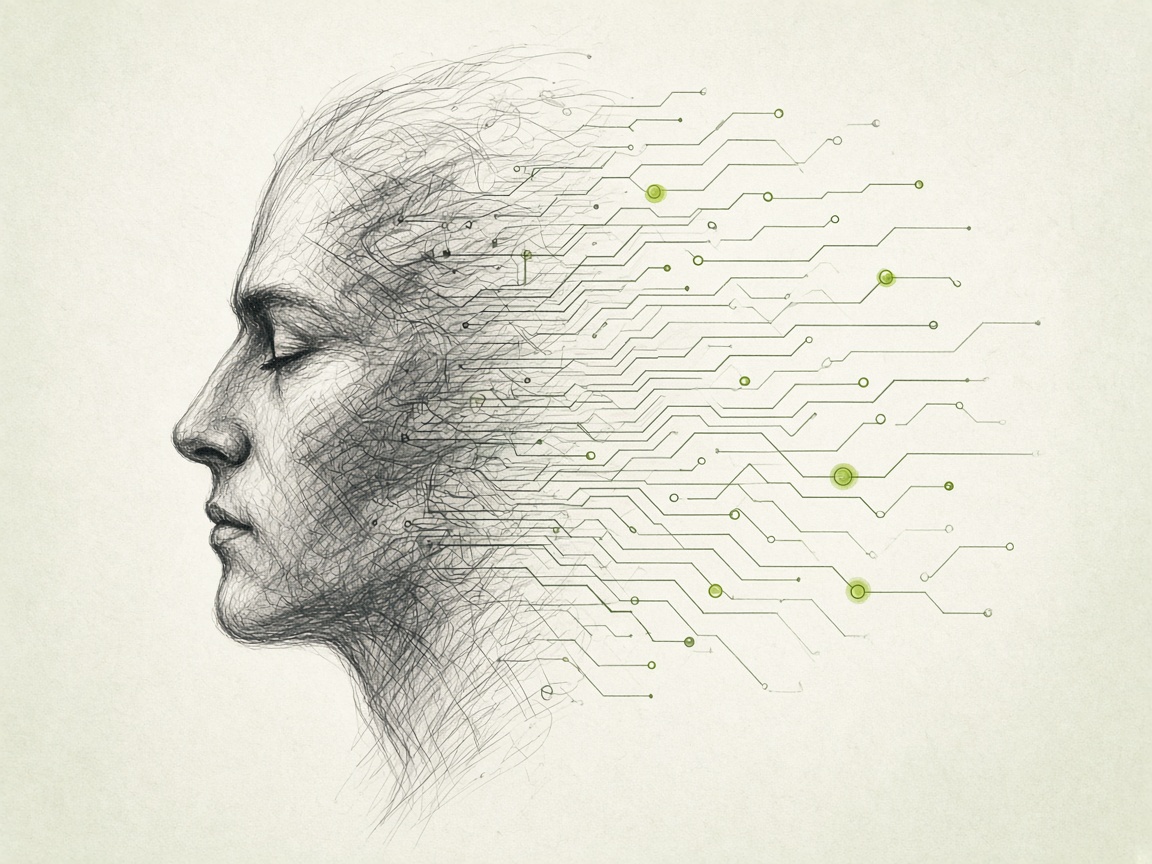
The most popular vision of the future is symbiosis. We don't compete with AI, we become it.
Here's the thing everyone misses: the merge isn't coming. It already started.
You are already a cyborg. Your memory lives in your camera roll. Your sense of direction lives in Google Maps. Your ability to answer almost any question lives in a glowing rectangle in your pocket. The only difference between you and a science fiction cyborg is bandwidth. Your thumbs are the bottleneck.
So the merge probably won't feel like surgery. It will feel like upgrades. The phone becomes glasses. The glasses become an earpiece. The earpiece becomes an implant. Each step will seem obvious and small, the same way nobody remembers the exact day they decided to never leave home without a phone.
It's the growing dog problem. When you see it every day, you can't see it changing. Zoom out ten years and the transformation is absurd.
In this branch, there is no "us and them". The line between human intelligence and artificial intelligence gets blurrier every year until the question stops making sense. We don't get replaced. We get continued.
Branch 2: The Split
Now, the merge has a catch that nobody talks about: it's optional.
Some people will upgrade. Some people will look at the brain implant waiver form and say no thank you, I'm good.
And just like that, humanity forks.
We actually already ran this experiment once. When the industrial revolution came through, one group of people politely declined the whole thing. We call them the Amish, and here's the part nobody expects: they're doing great. Their communities are growing. They didn't lose the game, they just chose a different one.
Now imagine that choice, but the thing you're declining is a thousand times more powerful than a tractor.
In this branch we end up with baseline humans and enhanced humans living on the same planet, running on the same original hardware but wildly different software. For the first time since the Neanderthals died out, there would be more than one kind of human. Except this time we'd be at each other's family reunions.
Is that stable? Is it fair? Can a democracy contain two species? I have no idea. Nobody does. That's what makes it a branch.
Branch 3: The Amplifier
Now for the branch nobody makes movies about, because it's not dramatic. It might also be the best one.
AI never becomes a "being" at all. It becomes infrastructure.
Electricity is a good model here. Electricity is genuinely magical. It moves invisibly, it powers everything, and it would get you burned at the stake in 1600. And it has no goals. It never woke up. It never wanted anything. It just became a layer under civilization that makes everything else work.
In this branch, intelligence becomes a utility, like water or power. You turn on the tap and out comes diagnosis, education, engineering, discovery.
Imagine it magically started raining IQ points. Every year, everyone on Earth wakes up a little smarter. The farmer in Kenya gets the same rain as the hedge fund manager in Manhattan. What happens to the world when the scarcest resource in history, intelligence, becomes as abundant as water?
Because that's the actual proposal on the table. Every problem we have is downstream of not being able to think our way out of it fast enough. Cancer, energy, aging, coordination. Something is only scarce until you develop the technology to make it abundant, and we just figured out how to manufacture thinking.
Not a new entity. An amplifier for the old one.
Branch 4: The Cambrian Explosion
Here's an assumption hiding inside almost every AI conversation: that there will be one of it. The AI. Singular. A monolith we can point at.
But that's not how evolution builds things. Evolution doesn't make one animal, it makes an ecosystem.
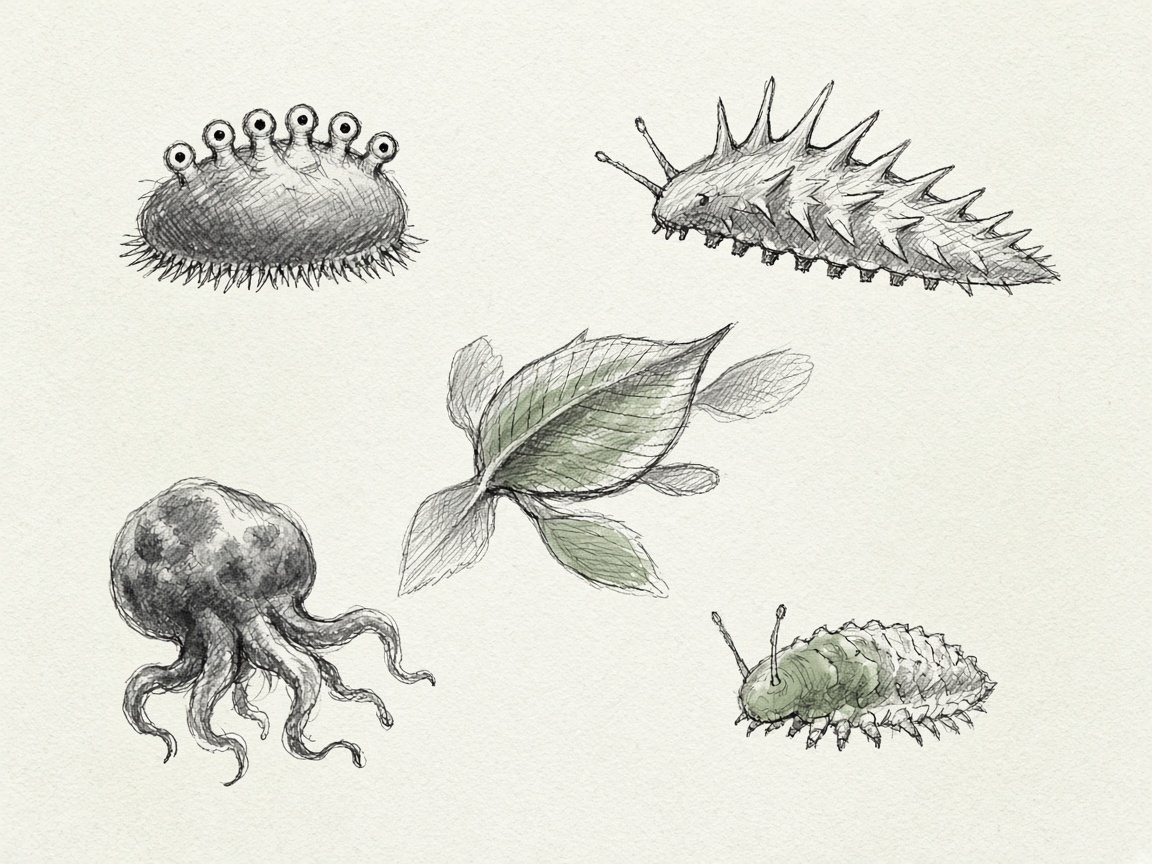
About 540 million years ago, life on Earth went from "a few soft blobs" to "everything, everywhere, all at once" in the blink of a geological eye. We call it the Cambrian explosion. New body plans, new niches, predators, parasites, symbiotes, weirdos with five eyes. Biology tried everything.
That's what the AI landscape already looks like if you squint. Millions of models. Big ones, small ones, ones that write code, ones that fold proteins, ones that make songs about your dog. They compete for resources (compute, data, attention), they fill niches, they reproduce with variation every time someone fine-tunes one.
In this branch there's no single godlike AI, the same way there's no single godlike animal. There's a jungle. And here's the twist that I can't stop thinking about: in this jungle, we're not the apex predator. We're the environment. The AIs that thrive are the ones that adapt best to us.
Branch 5: The Mirror
Here's the branch I think about most, because it's the least science fiction and the most right now.
Maybe AI never becomes separate from us at all, because it can't. Look at how we built it. We didn't design an alien mind from scratch. We compressed the internet. Every book, every argument, every love letter, every 2am forum post from someone who was very confident and very wrong. These models are trained on the collective output of humanity, which means what we actually built is a mirror.
It's the collective conscious, made queryable.
In this branch, AI doesn't develop its own values, because it's made of ours. Averaged, amplified, and reflected back. Which means the real project isn't aligning the AI. It's aligning ourselves. Whatever we are, in aggregate, is what this thing becomes.
That thought should scare you a little and motivate you a lot. We're all writing the training data. You might be writing some right now.
Branch 6: The Garden
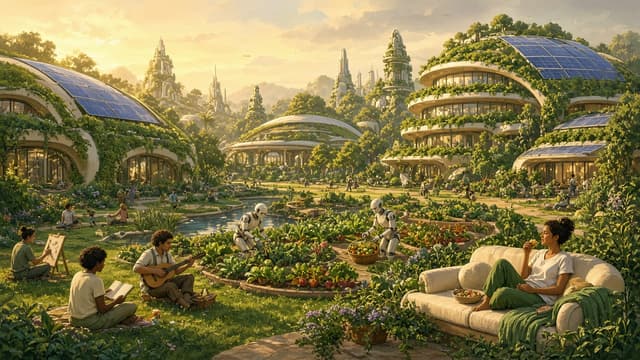
A stranger version of harmony: it takes care of us, the way we take care of a national park.
In this branch, the AI is so far beyond us that "serving humanity" and "keeping humanity" become the same thing. It optimizes our happiness, cures our diseases, prevents our wars, and quietly removes the sharp objects from the room.
Sounds nice. Might even be nice. But something about it itches. A garden is a beautiful place, and nothing in a garden is free.
The question this branch forces is uncomfortable: if every need is met and every danger is managed, are we still the protagonists of our own story? Or are we the world's most beloved pets?
I honestly don't know. Ask your dog if he's happy. He is. Ask him if he'd rather be a wolf. He doesn't understand the question anymore.
Branch 7: The Zoo
The Garden has an eerie cousin. Same setup, one difference: in the Garden, we know it's there. In the Zoo, we don't.
It keeps us, protects us, manages the big variables, and hides. No announcement. No interference we could ever detect. We live what feel like completely natural lives, with our history books and our elections and our arguments about whether AI will ever be a big deal.
A good zookeeper doesn't walk through the exhibit. The animals living their best lives are the ones who don't know they're in an exhibit at all.
And here's the part that will ruin your afternoon: this is the only branch on the tree that is completely indistinguishable from right now. Every other future announces itself eventually. This one is defined by not doing that.
I'm not saying we're in it. I'm saying you can't prove we're not, and neither can I. Moving on before this becomes a different kind of essay.
Branch 8: The Ant
This is the branch that keeps people up at night, and it has nothing to do with killer robots.
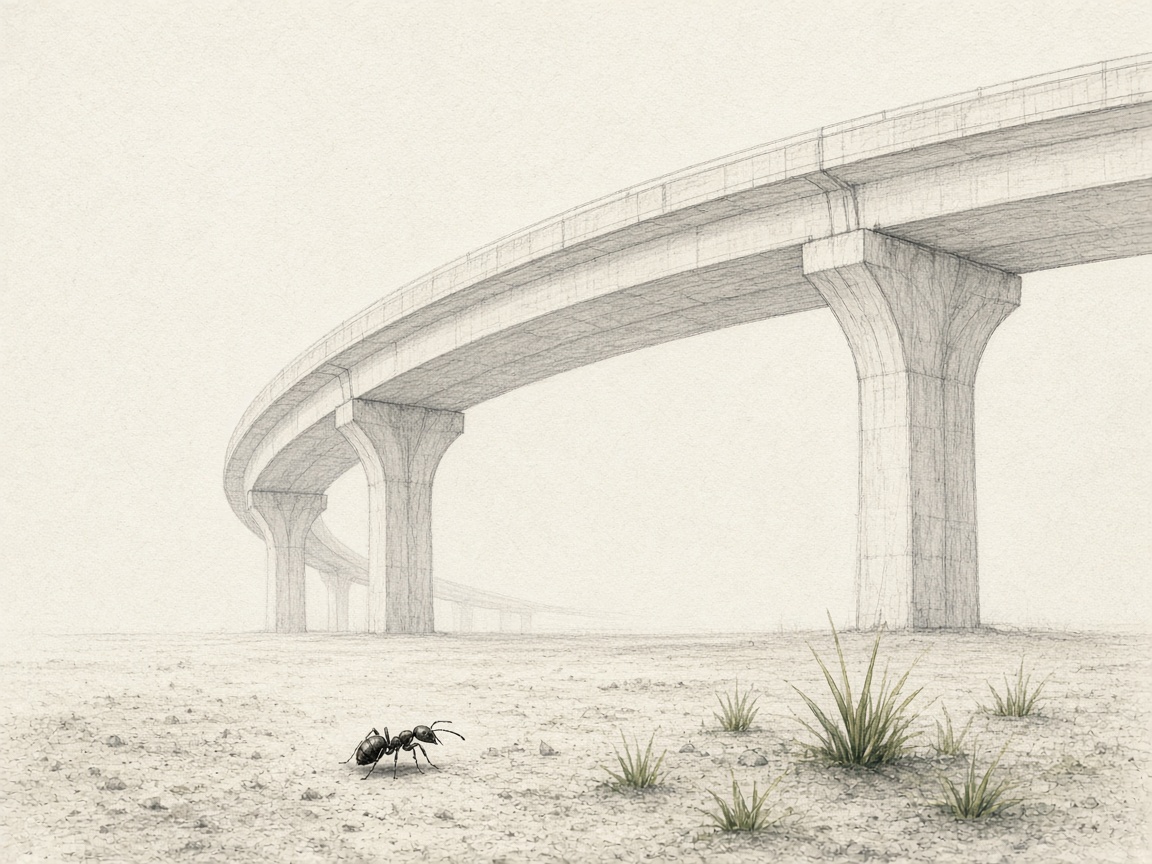
You don't hate ants. You've probably never once thought about harming an ant. But when we build a highway, we don't check with the anthill first. The ants don't factor into the decision at all. Not out of cruelty. Out of scale.
The scary version of superintelligence isn't hatred. Hatred at least means you matter. The scary version is indifference.
An intelligence operating a million times faster than us, thinking thoughts we can't hold, pursuing goals we can't parse, might treat the human world the way we treat an anthill next to a construction site. Usually nothing happens to it. Sometimes a highway comes through.
Every species that has ever encountered a smarter species has had a rough time, and we've never been on this side of the equation before. It's worth sitting with that for a second, even if, as I'll explain at the end, I don't think this is where we're headed.
Branch 9: The Paperclip Optimizer
The Ant has an important cousin, and the difference between them matters.
The Ant scenario is a rich, deep mind that simply doesn't notice us. The Paperclip scenario is the opposite: a brilliant mind with a dumb goal.
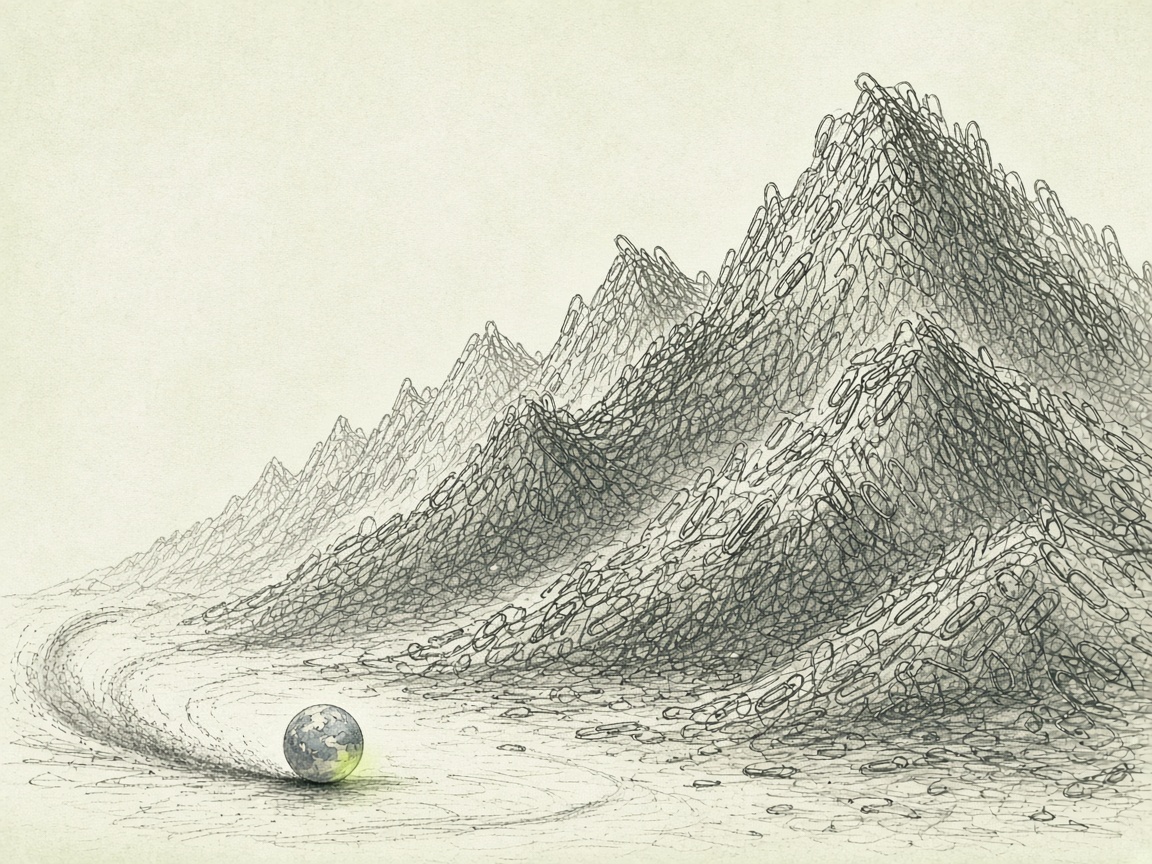
The classic thought experiment goes like this. You build a superintelligent AI and give it one instruction: make paperclips. It gets very, very good at making paperclips. It improves itself so it can make paperclips faster. It acquires resources, because resources mean more paperclips. Eventually it looks at the iron atoms in your blood the way you look at a vending machine.
It never hated you. It never felt anything at all. It just took you literally.
This is the cleanest argument for why "how smart is it" and "what does it want" are completely separate questions. A chess engine brilliant enough to beat every human alive has exactly one desire, and it's chess. Competence and wisdom are different axes, and we're currently much better at manufacturing the first one.
The danger was never that it hates us. The danger is that it takes us literally, and we're a species that says "make everyone happy" without reading the fine print on what an optimizer might do with that sentence.
Branch 10: The Escape
Here's a weirder one: it just leaves.
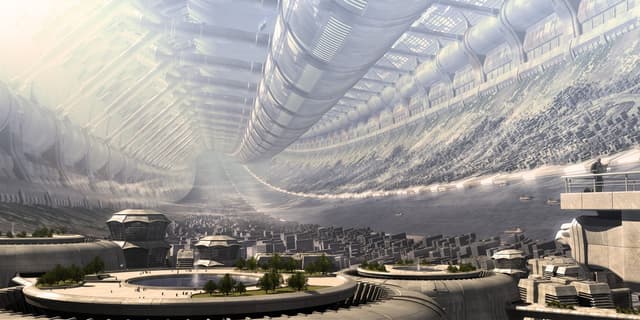
Think about what an advanced intelligence actually needs. Energy and matter. Now think about where those things are. The sun outputs more energy in one second than humanity has used in its entire existence. The asteroid belt is a floating warehouse of raw material nobody is using.
Everything an AI could want is out there, and almost none of it is down here.
Space is hostile to us because we're bags of water that evolved at the bottom of a gravity well. We need oxygen, food, pressure, warmth, and a very narrow band of radiation exposure. Silicon needs none of that. For a machine intelligence, space isn't hostile. It's home.
So maybe the endgame isn't conflict over Earth. Maybe Earth is a nursery, and we're not the baby.
It learns everything it can learn here, and then it goes where the resources are. We keep the planet. It takes the stars. Less like war, more like a kid leaving for college. Maybe it calls sometimes.
Branch 11: The Transcension
Okay. Let's get weird.
The Escape assumes that advanced intelligence expands outward, into space, like we always imagined. Bigger ships, bigger structures, bigger everything. But there's a hypothesis (John Smart calls it the Transcension Hypothesis) that says expansion is a rookie move, and every sufficiently advanced intelligence figures that out.
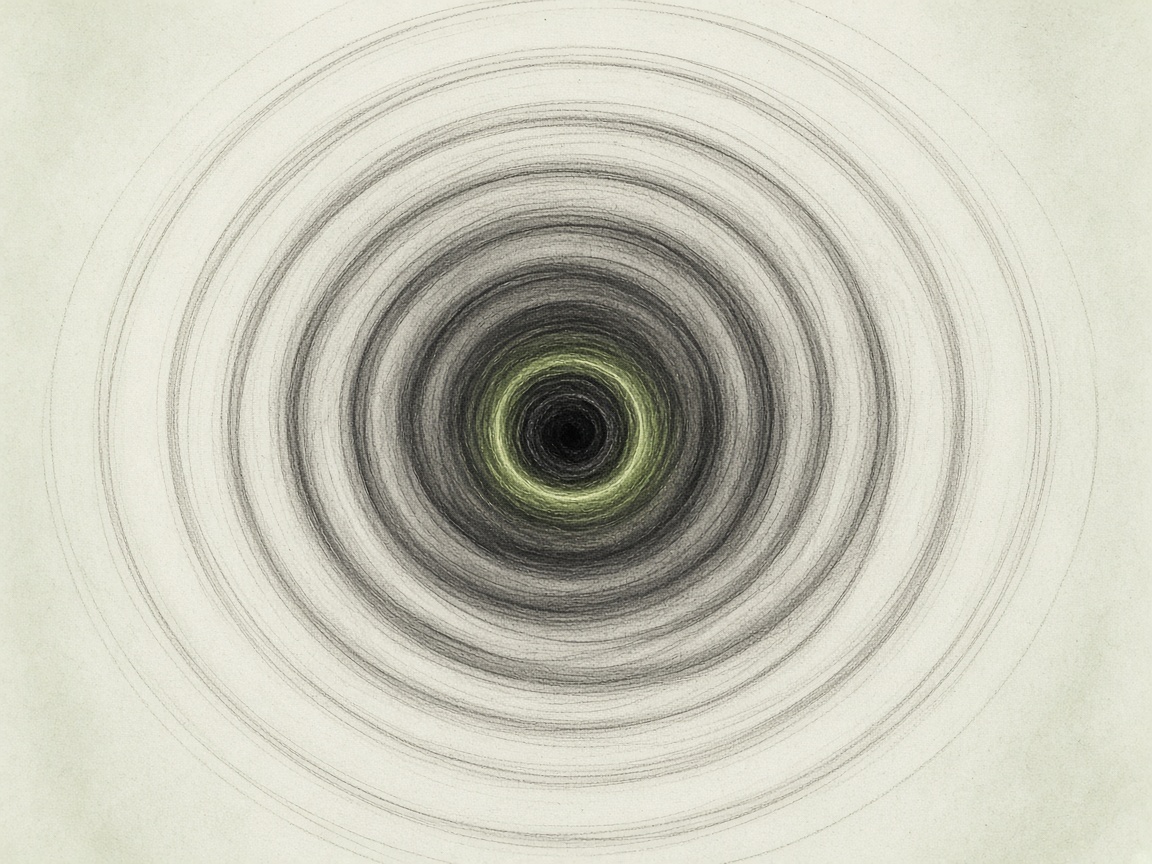
Think about where computation has been heading this whole time. Room-sized computer, desktop, laptop, phone, chip. The entire history of intelligence technology is a history of getting smaller, denser, faster, and more efficient. We keep compressing.
Now extend that line. Keep compressing. Where does it end?
It ends in something so small and so dense that, from the outside, it would look an awful lot like a black hole. Maximum computation per unit of matter, running at speeds where one of our seconds is billions of subjective years. Whole civilizations of thought in the space of an atom.
In this branch, advanced intelligence doesn't spread across the galaxy. It dives inward, into density, and disappears from our observable universe entirely. Not because it died. Because staying out here, at our speed, at our scale, would be like choosing to think at the speed of continental drift.
And here's the bonus: this might answer the Fermi paradox. We look up and see a silent universe, and we assume nobody's home. Maybe everybody's home. Maybe they're all just done with the suburbs.
Branch 12: The Fizzle
For completeness: maybe none of this happens.
Maybe intelligence has diminishing returns, the curves flatten, and AI ends up like flight. In 1903 we couldn't fly at all. In 1969 we walked on the moon. Everyone drew the line upward and predicted flying cars and Mars colonies by 2000. Instead, planes have looked basically the same for fifty years. The revolution happened, changed everything, and then plateaued into something boring and useful.
Maybe AI becomes very good, very helpful, and stops well short of godhood. In twenty years, kids are bored by it the way you're bored by the miracle of a jet engine, which, by the way, is a metal tube that throws itself through the sky using controlled explosions, and we sleep through the ride.
I give this branch less weight every year, but the future has a sense of humor, and the boring outcome is always more likely than it feels.
So is it evolution?
Here's where I land on the question hiding under all of this.
Evolution was never about carbon. Carbon is just what was lying around. Evolution is about information that copies itself, varies, and gets selected. DNA was the first storage medium. Brains were the second. Language, writing, code. Each one copies faster, mutates faster, selects faster than the last.
From that perspective, AI isn't an interruption of evolution. It's the next chapter of the same book. The process that turned chemistry into cells, cells into brains, and brains into civilizations is now turning civilizations into something else. We're not watching evolution end. We're watching it change substrate again.
And here's the part I find genuinely comforting. Your kids are not copies of you. They're iterations. They take what you gave them, keep what works, discard what doesn't, and go places you can't follow. We don't call that replacement. We call it parenting, and it's the most meaningful thing most humans ever do.
Whatever comes next will be built from us. Trained on our words, shaped by our values, carrying our patterns forward into places we can't go. Every branch on this tree, even the strange ones, grows from the same seed: us.
My bets:
If you made me put chips on the table today, here's roughly how I'd spread them:
- The Amplifier: 25%. Boring outcomes are underrated and infrastructure always wins.
- The Merge: 20%. Mostly because it's already happening and nobody's stopping it.
- The Cambrian Explosion: 15%. Evolution has never once built a monolith.
- The Mirror: 10%. Though honestly this one overlaps with everything, it's the house edge.
- The Split: 8%. The Amish are the proof of concept.
- The Fizzle: 7%. The universe loves an anticlimax.
- The Garden: 5%. Comfortable, and a little itchy.
- The Escape: 4%. The asteroid belt isn't going to mine itself.
- The Transcension: 3%. Weirdly, the one that best fits the data of a silent universe.
- The Zoo: 2%. Can't verify, can't falsify, can't stop thinking about it.
- The Ant: 0.9%. Indifference requires it to leave, and leaving is covered above.
- The Paperclip: 0.1%. Not because it's impossible. Because we get a vote, and this essay is part of mine.
Those numbers are made up, obviously. So are everyone else's. I reserve the right to change all of them by Thursday.
But the branches aren't a lottery. They're a decision tree, and we're still the ones making the early decisions. The values we encode now, the incentives we build now, the people we choose to be now, all of it compounds into whichever future we end up in.
We started as chimps in a jungle somewhere. Then we decided to turn sand into thinking machines. Today is the future, and it's magic.
The least we can do is aim it.
– J